Questions? Call 855.338.8696

As they say in business, it’s all about risk, risk, risk

Posted May 14th, 2012 by Matt De Leon

The three most important factors in creating a business? Risk, risk, risk.

If you try one, JUST ONE, thing that is “lean startup-ish”, try thinking about your startup purely in terms of risk. Sure, Eric Ries taught us about validated learning and Ash Maurya has shown us how to learn from problem interviews and solution interviews. There are lots of tools out there for the lean startup crowd. But the question remains, how can I get started?

By focusing on risk. The principle that both of these entrepreneurs share is that a startup must work hard to minimize risk. Validated learning, customer interviews, lean canvases, innovation accounting…in the end, these are all tools for reducing risk in a startup. Here’s why: the biggest risk in a startup scenario is that we’re DEAD WRONG about our idea and its place in the world. So tools are invented to keep ourselves accountable to the real world.

I’ve been recently pursuing an idea to help K-12 teachers communicate better with parents. I don’t have 40 hours a week to spend on this, and it’s a one man team until there’s validation of the idea. As a result, I need a simple, clean plan for testing my idea. Here’s the process I followed:

Brainstorm Risks

There are a couple facets to my app: it requires parents to sign-up, teachers must produce content, and schools need to pay. Based on these few facts, I came up with the following list of risks:

- Parents and teachers must find value in the app.
- Schools must be willing to pay for the app.
- Parents must voluntarily sign-up to receive communication.
- Teachers must be willing to try the app.
- Schools/teachers must populate the app with student data.

Prioritize the Risks

I then prioritized the risks based on two factores: the degree of risk and timing. The riskiest items must be worked on first. But just as important, I needed to account for timing: which risks do I have the resources to tackle NOW? Based on these two questions, here’s the prioritized list:

1. Parents must voluntarily sign-up to receive communication. (There’s no point to the app otherwise!)
2. Parents and teachers must find value in the app. (Who cares who pays or how many teachers try it if no one values it?)
3. Teachers must be willing to try the app. (I need teachers to voluntarily start using the app.)
4. Schools must be willing to pay for the app. (Extremely important! But I want to test the product before I have to wait 3 more months to get product feedback again.)
5. Schools/teachers must populate the app with student data. (Eventually, but not NOW, I need student data to be populated without me spending hours prodding teachers to do it.)

Often times, the greatest risks are that you’re building something people value and that people will pay for it. Or maybe you’re inventing new technology, and the risk is that it can be done affordably. Or it could be that you need to secure patent rights. But, SaaS products (software as a service) tend to see the same reasons for failure: a poor value proposition or insufficient revenue.

Create a Plan to Mitigate the Risks

In my most unemotional state, I can now view my business as a combination of those 5 risks. If I’m able to mitigate them, then the business should succeed and the money should roll in. But, how do I work towards eliminating these risks?

This is where your planning powers play a role. You must make predictions about what to expect if you’ve effectively mitigated a risk. For example,

If I can onboard 25% of parents for ONE class at ONE school, then I am confident enough to move on to the next risk.

Here’s the kicker: the first few months are more about instilling confidence in my idea rather than scaling a real business. That’s why the 25% number is fairly low and I’m only testing with ONE class. If I can’t meet this challenge, then I need to reset, find a new class, and/or improve my onboarding process.

My second risk is tested in this manner:

If teachers send 20 communications per week to parents, and parents read 75% of them, then I am confident enough to move on to the next risk.

And so the pattern continues, until I have enough confidence to take the business to the next level…

Kicking Sprint Reviews to the Curb

Posted May 11th, 2012 by Dave Christianasen

User Stories Suck for the Last Mile

Yeah, that’s right. I said it. User stories suck for the last mile. What’s the last mile you say? It’s a term borrowed from my telco days, when Sprint had a U-verse-like offering that was way ahead of its time and you could only get in Kansas City. It was awesome. But it died, because getting the last mile of networking was proving to be too expensive. The last mile, in this case, was the distance between Sprint’s closest network terminal and your house.

For user stories, the last mile is the distance between the story being functionally complete (i.e. everything works as expected) and accepted (i.e. and it looks the way I want it too). It is often a long list of layout and style changes like “left-justify X” and “make the margins line up between Y & Z”. These changes are often hard to communicate via written words, but more importantly the delay between feedback and development is too long and, since the changes tend to be small, the cost of switching tasks between all the stories that need tweaking can be pretty spendy.

Sprint Reviews Can Make This Worse

If most of your feedback collecting occurs at the sprint review, this only becomes worse because the person recording comments is frequently not the person giving feedback. Usually, one team member takes notes while the other team member demos stories and the product owner(s) discuss changes. As a result, you create this huge backlog of bugs, tweaks, chores, or whatever you call them that you do prior to the stories being accepted and you starting new ones.

Years ago I started a practice of implementing as many of the tweaks as I could immediately following the sprint review while they were fresh in my mind, but it’s still not optimal. Why?

Because the sprint isn’t finished. We walked out of the sprint review with more stuff to do prior to the stories being accepted. This is a bit discouraging, especially if even more problems are found after the initial round of tweaks go in. If you end up going through cycle after cycle of tweaks, discouragement turns into frustration.

“Peer” Programming Works

About two months ago I gave up on sprint reviews. Instead, when I finished a story I simply skyped at my product owners that I was done, even before I pushed my code or marked the story delivered. I shared my screen with them, gave a demo, then they would just type changes at me in Skype, which I would implement in real time. Because we were using IM and screensharing, they could keep doing other stuff while I made the changes. When I was done, I’d IM them back and we’d start over. After a while, the feature was done. I’d push the code, the CI server would update test, they’d give it a final run through and accept the story. Piece of cake.

I call this peer programming rather than pair programming just because only one of us is actually programming, but the peers are giving feedback in real time. It’s very, very efficient, and we haven’t had a sprint review since we started doing this.

Take It Up a Notch for the Big Event

Earlier this week I spent three days onsite “peer programming” with the product owners. We set up shop around a table in the Developer Town offices with my second monitor where everyone could see it and went through the application one feature at a time tweaking features prior to ‘soft’ launching the new product on Wednesday afternoon. It was exhausting, but the end product is totally awesome.

This kind of pre-launch peer programming is a perfect way to efficiently get all the little details right. It’s very effective communication because the feedback loop is super short and the people with questions and answers are together. It’s a lot better than a sprint review because, among other things, the story gets accepted at the end of the session.

Making it Productive

Here are some pointers for making peer programming work well:

  1. Have the product owner verify that features are “functionally complete” prior to the peer programming session. They can make sure the workflow is working in a relatively bug-free manner so that the changes that are left are going to be primarily small changes to the design and layout.
  2. Use developer-tools to make CSS changes in real time, then copy them into your code once the change you are making looks right. This minimizes the amount of time between code change and feedback (you don’t even have to refresh your browzah).
  3. Peer program as soon as a story is functional. That way, your mind is still in the code and you don’t have to re-acclimate yourself. This has the added benefit of avoiding a deliver-reject-restart cycle, which is a bit demoralizing.
  4. Take breaks when you need to. Peer programming is tiring, so step away from it every now and then if you are in a marathon session of it. If you get worn out you will also get stupid.
  5. Crack some jokes and don’t get all mad. Peer programming can be hard for a certain type of person. You know who you are. You don’t like criticism and every little change is a personal attack. You’re in the wrong business. Okay, seriously, there aren’t many people like that and most of them work in corporate IT environments, but  it’s easy after really long peer programming sessions to start getting frustrated and worried that you’ll never get it right. Just take a deep breath and hang in there. Slog on through, and try to crack a joke or two if you start feeling defensive.

Peer programming throughout a sprint is definitely more effective than using a sprint review as a periodic feedback point. If you can’t get your product owner to review stories during the sprint, just replace the sprint review meeting with a peer programming session and get through as many of the stories as you can. When you run out of time, schedule some more time. Wait – we just said they didn’t have time during the sprint – why can we schedule it now? Because peer programming is something most product owners will really like. They get to see the site change in real time and find lots of value in this. Everybody can find time for the things that matter to them, and once product owners get it they will free up time.

Sprint Reviews without Demos

So, we just kicked sprint reviews to the curb, but should we really abandon them altogether?

Maybe. It’s very easy for demo-less sprint reviews to become meetings with high ceremony and low value. It’s probably better to not have them than to have those types of sprint reviews. I would only hold a sprint review if there are meaningful issues to be discussed, and then I would plan retrospective activities to help work through the issues. Rote sprint reviews are a waste of time. Make them meaningful or toss them.


Things you know but never thought of…

Posted May 8th, 2012 by Coffey


Customers. We all work everyday to gain new ones, retain current ones and hopefully gain knowledge from them on how to make our products better to fit their needs.  Once we take this simplistic concept and actually execute on it, we then look to how we present our product to the consumers. We learn that there is a difference between feature and benefits. We learn that a feature that might be meaningless to the end user could provide entrée to multiple benefits that either make their lives easier or happier or both.  In order to make that happen, we need to define our customers. We need to know our market and how we can provide what that market needs/wants better than anyone else.

Today, I want to talk about who your customer really is. (I will tell you right now that this discussion is aimed at all companies that have employees.) When I ask this next question it can sometimes feel like a trick question or a trap. The reality is that it’s meant to make you think: to possibly shift how you might view your customer, or even better, shift your understanding of who your customer really is.  So here is the question, “Who is your primary customer?” Wikipedia defines a customer as

“A customer is the recipient of a good, service, product, or idea, obtained from a seller, vendor, or supplier for a monetary or other valuable consideration.”

I agree with this definition and want to ask you again, “Who is your primary customer?” if you are like most, you will be thinking about who might be paying you the most or who might be taking most of your time. Today, I want to challenge you with the concept that your EMPLOYEES are your number one customer. Now, I guarantee you this will cause some debate but here is my personal view, one that I gained from not looking at my employees as my number one customer.  Every time you hire a new employee you are looking for a target personality, someone that fits you your need, but the one being hired is also looking for something that fits them and their needs. So let’s think about this. The one that you are about to hire is about to be “the recipient of a good, service, product, or idea (vision), obtained from a seller, vender, or supplier for a monetary OR other valuable consideration.” The OTHER in this statement is simply their time, their valuable life: a limited commodity that can not be given back. Honestly, I don’t think either side really thinks about work this way, but they should.

Now that we understand that those that you hire are purchasing what you offer with their life, their time! Let me ask you this, what product do you offer? Have you ever thought about productizing your values, mission, vision and comp plan? If not you leave yourself open of have employees with expectations that they define because you haven’t. We all know what happens when we have clients with unrealistic expectations… if never turns out good! So what do we do with this?

Define your Product:
Take your mission, vision, values and comp plan and present it to your future hire as a product with a clearly defined feature list resulting with benefits.

Value your customers:
Highlight what makes your services better than any other provider out there!

Get feedback from your customers:
Freaking listen to your employees!

Refine your product:
If your product is the same it was five years ago, I would argue you’re not listening and you’re not progressing

I guarantee that those that establish this mindset and set their employees as their primary focus will find that their secondary client (the paying ones) will be taken care of very nicely.

For those of you that are employees right now and reading this, thinking this is your anthem… understand that there will be a post coming just for you! You’re not off the hook just yet! Until then, let’s discuss!

PS: If you would like to know what the picture has to do with this post, ask me in the comments.

“The Rise From The Middle” Why Indianapolis is the place to be… Even over California!

Posted May 1st, 2012 by Coffey

“Seriously?! You chose to move to Indy from California?” That is the first question I usually hear when I tell people that I did choose Indy over California just one month ago.

“Why!?” is the next question followed by

“Were you dropped on your head as a child?” which of course I answer with, “Yes, but that has nothing to do with it!”

To quickly explain, well that all depends on how fast you read, this is my story as to why I am here at DeveloperTown @DeveloperTown . (If you could care less of my story and just want to get to the facts of why I believe Indianapolis is by far the better place to be over California when it comes to the startup community, CLICK HERE)

Here we go…

I was born and raised in Napa Valley and I worked in the wine industry for a good amount of time.  Just so you know, I am game to talk wine with anyone that is a wino like me. I was raised around technology and was involved with some startups out of the Bay Area but never saw myself as an Entrepreneur. I loved people, leadership, process, and making things more efficient. If you were to ask me 10 years ago what my dream job was, it was being a camp director and surf instructor for the rest of my life… FYI, that didn’t happen.

About three years ago, I was provided the opportunity to raise money to purchase an account that I was managing from a company that I worked for and start a new company. Honestly, I had never raised money, I didn’t have aspirations of running a company, and I was a Communications major in college… enough said. I wrestled with this opportunity and realized that the biggest mistake I could make would be allowing fear to define my path in this life. With the support of many amazing people back in California and a supportive wife, I was able to raise $2.5m , acquire the account, and close the deal in less than 90 days. Over the next 45 days we went from 3 to 25 employees and within 10 months we grew to become a multi-million dollar company with offices in California and here in Indianapolis.  Last year I brought my family out to Indiana for what was supposed to be a 3-month stint and 14 months later I am still here!

I came to Indy to work with the office here and to better understand what this city had to offer. This is what I learned. Note that in the next couple paragraphs I am not name dropping but more giving shout outs to those that made the decision to choose Indy easier.

My family and I set our feet on Indiana soil three days before the epic ice storm of 2011. I have videos of using a hammer to clear the ice just to get into our offices! We wanted to go back home but I wasn’t going to let the weather deter me, I was interested in something more, interested in finding the TIPPING POINT. I had a strange feeling that Indy was gearing up to see a huge TIPPING POINT. (I will come back to this TIPPING POINT) So typically when I come to a new place I always want to know the people, the hearts of those people, and really see what drives the local community. One of the first people I met was a gentleman by the name of Greg Downey @greg_purim. Now Greg is a guy that you want on your side, one that could seriously hurt you if he wanted to, but he has a huge heart and a passion for startups,  a passion to connect people and a passion to help others succeed. Greg then started to introduce me to many people in Indy like Jeff Kirk of Bingham Greenebaum Doll LLP (who was a rock star for my company with a couple tough legal issues and has also introduced me to an amazing group of minds here in Indy), led me to Aaron Nelson @asnelson (who is an Indy native but is rocking it now at Google with Double Click), Michael Cloran @mecloran (a local rock star when it comes to innovative thinking) and last but not least Christopher Day and his brother Stephen, which if you don’t know the Days, your life is no where near where it could be on the fun scale of life.

Side Story: I get a text from Jeff Kirk and Chris Day asking if I would like to go “surfing”. As you can imagine I thought this was a joke and I was instantly home sick. But to my surprise, they were totally serious! So last summer these wonderful guys took myself, Chad Ashcraft, Matt Toyer, and Kelly Hendricks @blastkelly out to wake surf on Geist! Epic epic day, so good for my soul and just so you know both Matt Toyer and Kelly Hendricks are pros at wake surfing!

Through this group I was also introduced to a couple city officials and was given a great view of how the local government is really supporting the local businesses and especially startups. For those of you that don’t already know this, you are all freakin blessed! My local government in California basically kicks the small business out and provides very little support. All of this was a 45 day ride for me that brought me to the conclusion that Indy was where I needed to move my company… all of it. Now some of you might know that even if you are a CEO, it doesn’t mean you call all of the shots.  I pushed for about a year and as of a month ago the board decided to close the Indy office and move everything back to California.  The board wanted me to move back California. I can tell you a year ago this would have been a hard decision, but last month, it was a five minute decision that went like this, (in summary of course)

“Coffey we would like for you to come back to California”

My response, “Hold on one second… hey love (that’s my wife), they want to move everything back to California and for us to go back as well. I personally think Indy has the TIPPING POINT FACTOR and it’s time for us to place our stake in the ground here… you ok with me resigning and selling off my side of the company so we can stay here for a while?”

Wife’s response, “do you really believe this is the place?”

Me again, “YES!”

Wife, “then do it!”

Me again, “hey board, I will help you through this transition but I am staying here.”

As you can imagine, this was a huge step of faith for us and at that time I did not have a plan as to what we were going to do. As the story unfolded, on a Thursday night I let my contacts here know I was staying.  Friday morning Cloran asked me to come down to DeveloperTown to talk with him and some of the team (Shout out to Mike Kelly goes here).  One week later I decided to come on board and I will tell you that I could not be happier and from my vantage point, I could not be in a better position to be a part of the TIPPING POINT that will happen here in Indy.

So let’s talk about this TIPPING POINT. Here is what I see:

Growth in Mindshare deciding to stay – I can’t tell you why or how this happens but it’s one of those macro economic shifts that you can see when a generation leaves for the coasts, gains amazing experience, and then decides they want to come back home. If you look around this city you will be able to list names of people here that have done this and have started companies that are now attracting young minds to stay after college.

Deal Flow – because of the above, the amount of deals and extremely good ideas that I have seen here over the last year has convinced me that Indy has a huge potential to make a name for itself in not only measured marketing but also in tech. Simply go to a Verge event, follow Matt Hunkler @hunkler and you will see what I mean.

Desire for a shift or diversification in investments to happen – We are seeing more and more investors want to diversify their portfolio into the tech space but are looking for ways to verify the options. We have some great IPOs which will birth new young investors that understand this space. We need to keep both the ideas and the money HERE!

Cost of living – I must say that the quality of life due to this is amazing for someone coming from California. This is extremely attractive and Indy is proving that it’s a city that can be enjoyed. Once again, hats off to the local community and government.

Family Focused – Hands down one of the best places to raise a family.

In short here is the map that I see:

Due to Mindshare coming back we are seeing great IPOs take place which will infuse capital that can be used as startup fuel which will keep the mindshare needed to grow this city!

Now here are my concerns. Even though people are getting excited and these shifts are starting to take place we still need to find a way to fund companies in between the friends and family round and “A” round founding. This needs to happen quickly.

I do love seeing people like Chris Day trying to rally with individuals to do this. I love seeing new companies like LocalStake @localstake focusing on crowd sourcing. (By the way, the guys over at LocalStake are great guys and if you don’t know what crowd sourcing is… look it up now!) BUT I also am seeing some of your big VCs on the coasts start to focus on this level of investment in cities like Austin, Denver, Boston, Atlanta, and even Indy.

With that said, I believe that this city has what it takes to really be a hot hub for startups. I believe in DeveloperTown and the team that exists within these houses. I believe that both the startup entrepreneur and the investment community need a solid accelerator and development house like DeveloperTown that focuses on guiding startups through the pain of building a tech company from concept to market push. I believe in our local government and its support, which we just saw last week as Mayor Ballard spoke here on his view of 2012 for our city. I believe in all of us!

So as I was driving home last night, a great song by Jon McLaughlin @jonmclaughlin called Indiana came on my Pandora station. If you haven’t ever heard the song, it’s worth the $.99 but there is a line that simply says, …”It’s probably best I stay in Indiana”. Three weeks ago I said, it’s probably time I set my stake in Indiana. I will tell you that since I made that decision, I have not been more excited for this city.

Rise From The Middle!

*disclaimer – if I didn’t mention you and you know you have been influential in my life, don’t worry there will be more blogs! Seriously, Kyle @kyleplacy and Mason @jmasonhughes you will get love very soon in your own blog!:)

Coffey @coffeyhouse

Searching for the Right Design

Posted April 27th, 2012 by Matt De Leon

We’re making significant strides over here to improve our design process. And by design, we mean a lot of things: building a startup vision, creating the user interfaces, and presenting a beautiful look and feel for our clients.

My current work is primarily on a client project called TPG Marine Harbor Management System. Yes, long name, but the project boils down to helping barge servicers track their fleets and automate billing. Crazy stuff. I joined the project as the second developer, but I’ve since taken responsibility as the designer.

The way we’re doing design on TPG is this way: we figure out what problems we want to solve in the next several weeks, and we start designing solutions today. The challenge I’ve faced is knowing when I’ve completed a design task. Finishing design isn’t as clear-cut as completing implementation of a feature. Should I mock up every detail for the developer? Should I code all of the html/css and hand that over to the developer? And most importantly, am I done yet!?

I’ve come to realize that the most important aspect of design is CONFIDENCE. The ultimate question in my head is, am I confident in my approach to a solution? When confidence becomes the key to finishing a design, the less important details become, well, less important. No longer do I feel the need to write tons of html, css, and javascript to feel “done.” I write as much as it takes to feel confident. The design may appear half-baked, sometimes sloppy, and maybe even ugly. But that’s ok…because I’m not trying to perfect it yet, I’m just trying to convince myself that my approach will work.

Because we live in a world of scarce resources, we need to figure out what get’s us to completion the most efficiently. Here are some ways in which I’ve tackled finding confidence:

Wireframing

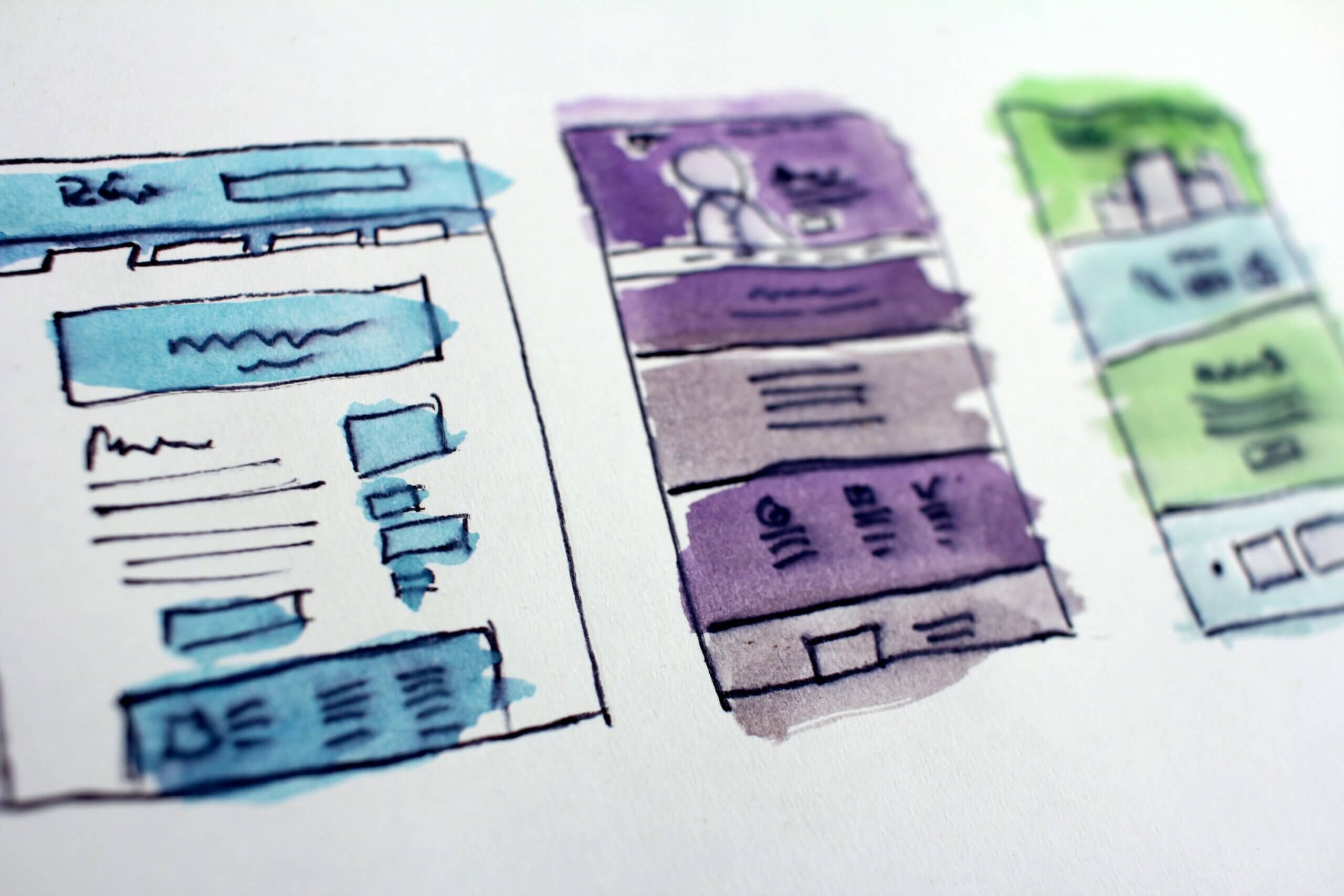
Wireframing seems to work well when an app is being built from scratch. It helps answer questions like, what content needs to exist? What actions can be taken? Who are the users? I haven’t used wireframing much since my project is far beyond the initial design phase.

Sketching

Sketching helps get design insights tangible quickly. Skteching can help you visualize a solution without committing much time. I’ve found that the ease of finding confidence or the lack thereof from a sketch depends on my level of experience with the project I’m on. The more experience I have, the better my intuition and thus  the more easily I can vet ideas in the sketching phase.

HTML / CSS / Javascript

Since my project has an existing codebase, I spend most of my design time working with these three tools. Using git, I checkout a design branch for each design task and start messing around, searching for what interface and interactions (clicking, entering data, etc.) give me confidence. For my last design task, I abruptly stopped working on my design and concluded I had confidence, long before the interface was polished and the interactions complete.  But that was OK, because I knew I could perfect everything after design is finished.

(For all Rails/Git folks out there, an extra tip: I will clone a second copy of my repository so that I can run two versions of my app, one for development and one for design. That way, I can see my design work in action in a browser window while implementing the design.)


The goal here of this design process is to think critically about designing solutions before implementing a solution. But it’s also to be lightweight as possible. Good developers on small teams don’t need to know every pixel of an interface. They need to know what the solution is. The deliverable from these design tasks is often nothing more than a series of implementation tasks for developers, a half-baked demo, and maybe some code to reference.

I would love to hear your thoughts on approaches to design. I’m sure the approaches will vary, given the needs of different clients, projects, and teams.

Will all my MidWest starters…please stand up

Posted April 19th, 2012 by AR3

So, you may have heard that the Mayor held his State of the City address here at our Town earlier this week. There was a lot of tweeting, liking, recommending, linking, socializing, and hubbub about this. We flooded the streams there for a while, because if you are plugged into the indianapolis startup tribe you saw a steady trending of coverage on every medium. During the monitoring of this coverage on Twitter, at one point I laughed out loud at a local fellow member of the tech entrepreneur tribe’s tweet “Anyone hear when or where the state of the city address was? Can’t believe I haven’t seen anything about it.” Gotta love some good sarcasm. :-)

This got me to thinking about why this is such a big deal. Being a Townie, I am ecstatic anytime we get to show off what we have done, what we do, and what we are capable of doing, for obvious reasons, but mainly because I truly believe in our overall vision and goals. But, if I wasn’t a Townie, I am pretty sure I would have still been geeked by the symbolism of the event. Symbolism that embodies what DT is about, but is much, much bigger than us.

The story of our tribe, our way of thinking, almost feels like an underdog story…

…there we are, lowly tech geeks that don’t  quite fit in with mainstream thinking

…crazy dreamers, being laughed at, because of our childish aspirations for something different

…questioners of the status quo, being ridiculed because we don’t adhere the popular model of what a productive citizen is supposed to be.

…backwards YeeHaw MidWesterner’s that should be leaving the heavy lifting to the coasts


Events like this, show that we are geeks, and damn proud of it. We do dream, and dream big, because dreams are what inspire innovation and forward movement in every field…we have proven this time and time again. We couldn’t live without our unfading pursuit of something better than what we have been sold. And, though we respect, and are thankful what the Coasts have done for tech, entrepreneurship, and small business in general; our Mid West swagger is now a world-class force to be reckoned with.


So, again, even though we were honored to host it, I don’t think this event was specific to any one company. It was symbolizing a revolutionary rise in an entire culture, a new way of thinking, a tribe the has been, and will continue doing amazing things. We all should be proud of what we accomplished, and allow recognition like this to give validation to those crazy late nights, to that extra TDD effort that produced some bad ass code, to that one in a billion design that you had the balls to put out there even though it may have been laughed at, to the sweat blood and tears that we have all put into moving this engine we call the #IndyStartupScene forward.


Without the entire tribe’s collective efforts there would be no DT, no SpeakEasy, no IPO’s coming out of our proud city. So to all of my fellow starters out there, kudos to you, stand up, take a bow, and let’s keep this thing going!


Writing Tests First, Code Second, and TSA-Style Tests NEVER

Posted April 17th, 2012 by Matt De Leon

Last week, David Heinemeier Hansson (creator of Ruby on Rails and partner at 37Signals) attacked a popular version of test-driven development: the TSA-style. The overarching characteristic of TSA-style test writing is failing to ask why a needless security check test warrants a breath of life in an airport app’s codebase. His main point is that tests aren’t free: they have a long-term maintenance cost like every other feature. And if tests aren’t free, then you better pay close attention to the tests you choose to write, because they’re costly.

At the heart of his blog post is a scorn for hard-lined test-driven development. And for the most part, I couldn’t agree more with him. But the part missing from his essay, and the part of TDD that most resonates with me, is that TDD drives good coding patterns.

When the going gets complicated, the complicated gets…tested

DHH’s last point was: “Don’t force yourself to test-first every controller, model, and view (my ratio is typically 20% test-first, 80% test-after).”

The idea of writing tests first, coding second comes from the idea that “if you can’t test it, then it’s not good code.” While this may not always hold true, I’ve found that this approach guides me as I write code.

When a feature gets complicated, it helps to write out what you expect to happen before firing away on all cylinders to implement it. And, in the world of startup-land where we don’t have bountiful time to write tons of Cucumber and Selenium tests, this is called writing a spec of unit tests.

When it comes to features with complicated requirements in Rails models, I almost always test first. This is not to say that those tests won’t change as I write code. In fact, once I have my basic tests written, I start implementing to get a feeling if the pattern proposed by my tests work or not. I spend time refactoring both my tests and code until I’m satisfied. This approach helps me break my models down into healthy, maintainable parts.

Even in writing javascript, the “test first, code second” paradigm plays a role. While I don’t write unit tests for javascript apps, I do try to write my code in such a way that it could be unit tested. That means delegating responsibility through the javascript app to ensure I can “isolate” expected behaviors (i.e. avoiding “spaghetti” javascript).

Where to draw the line

I think DHH nailed the hammer on the head: it’s easy to waste our time writing unimportant tests while leaving less time to test the critical, risky parts of our app. But in the process of doing so, he tried to refute what, to me, seems to be one of the most rational reasons for test-driven development: driving good programming patterns. I would encourage any new programmer to keep this in mind when valuing testing.

My First Month at DeveloperTown…

Posted April 9th, 2012 by Justin Kime

“You do what?”  That is usually the first question I hear when I try to explain to people what I do.

“Wait, you work in what?”  That is the most common question I get when I try to explain my office environment.

“That’s Awesome!”  That is usually the follow up response when I am finished explaining my job at DeveloperTown.

And that is exact reason why I started working at DeveloperTown a little more than a month ago.  It truly is an awesome place to work.

I graduated with a marketing degree, and like many people who are fresh out of college with a marketing degree, my options for what I could pursue were almost endless.  I could have done sales, communications, analysis and probably 10 other things with my degree, but fortunately enough I ended up working for a small robotics start up located in Indianapolis, IN.  For four years I honed my skills into what I really believe marketing should be about: developing a great product that meets real needs.

Digby at DeveloperTownWhen it was time for a change in jobs, I was fortunate enough end up at a place that has the same desire that I do: to build great products that meet real needs.  In my first month at DeveloperTown I have done more and learned more than I could have imagined.  Not only have I gotten involved with four different start ups helping shape their vision and product through design, but I have been given the opportunity to get my hands dirty and learn Ruby on Rails and Haml for building out the sites.

By no means do I claim to be a developer.  In fact, if any real developer looked at my code, I think they would vomit a little inside.  But the great thing about DeveloperTown is that everyone is open and willing to help you learn.  The one thing that I have learned is that everyone wants to help you out.  I just pop on over to another person’s house, knock on the door and am invited in.

I am excited about what the future holds.  I couldn’t imagine anything better than working in a start up that is helping build other start ups.  Plus, who doesn’t love to bring their dog to work.

Lean is a Mindset

Posted March 27th, 2012 by Matt De Leon

At DeveloperTown, we partner with entrepreneurs to be the “Technical Co-founder” of startups. Part of this responsibility is making business decisions, and the Lean movement has made an impression on us. This post and others will dive into our thoughts behind Lean.

A year and a half ago, I was making $2 of profit a week selling fruit on Indiana University’s campus. Three years ago I was spending $20k building a college social network based on culture. Neither venture made it. But one of these sticks out in my mind as a success: selling fruit.

Why was Fruitocracy, my fruit venture, a success? Long before I knew what lean meant, I had started Fruitocracy “going lean.” And in retrospect, this helped me make the critical decision to shut the doors after only 4 months of operation.

I’ve argued that lean is a dangerous word to use, because few people are on the same page about what it means to “go lean.” After reflecting on my past experiences, I came to understand the following:

Lean is a mindset. It is not any one set of practices, but a state of thinking about your startup. You cannot “go lean” by implementing any number of processes or tools. The only required process is the thought process of how to answer the big questions about your business sooner rather than later.

And that is why lean techniques are difficult to learn. Learning requires gaining an intuition, which is not had by reading any one book or blog post. Instead, lean is a determination to make smart decisions about 1) when to mitigate risks, and 2) how to mitigate those risks.

The best way to teach lean, then, is to look at examples and counter-examples, so that an intuition can be built over time.

A Tale of Two Startups

I started two ventures my sophomore and senior years in college, CultureU and Fruitocracy. The first was a large undertaking, with $25k in financing and as many as 30 people working on the project at one time. The idea behind CultureU was to provide a platform for college students to expose their talent. The second, Fruitocracy, was a fruit-delivery service for students living in the dorms. It started with one person, me, and maybe $20.

CultureU

At CultureU, my mindset was, “awesome idea, let’s hire a team of programmers and DO IT!” Nothing was to get in my way of getting a first release out. Our measurement of success was how quickly we were able to build the product we wanted.

The problem was that I wasn’t focused on prioritizing risks. I understood the risks of building a product that no one wanted, but I didn’t make an effort to prioritize work around answering the big questions. And there were several risks that were ignored until many months into the CultureU’s life:

- There’s a considerable supply of student talent.
- Students want to expose their work to other students and professionals
- Employers (our potential customer) are facing a poor supply of talented students in the job market.

The result? It took 8 months for my team to learn that we had a lousy product that lacked a compelling business model. Lesson learned? “Tackle the biggest questions first.”

Fruitocracy: A different flavor of startup

When I set out to start Fruitocracy, I wanted to be smart about building the business. The pitfalls of moving too fast and failing to ask the big questions were clear in my head.

My vision was to engender healthy eating on IU’s campus. The initial idea was to sell local fruits and vegetables at a produce stand on Indiana University’s campus. I had seen a produce stand flourish on another college campus. The big question in my mind wasn’t, will people buy fruits and vegetables? Instead, I had two big questions:

- Will the campus permit me to run a produce stand?
- Can I sell fruit for a profit?

I set out to answer those two questions, and within a month had the answers: I could buy local produce wholesale to turn a profit, but the campus wouldn’t dare see a produce stand!

A pivot was in order. I decided to try delivering fruit to freshmen. I knew this group was crippled by their lack of access to grocery stores and healthy eating on campus. I also knew I could run this operation independently of the university.

The big questions then became:

- Will freshmen buy fruit?
- How can I get freshman to order on a regular basis?
- Will freshmen order food besides fruit?
- Can I turn a profit?

I answered the first question by going to a couple of my friends’ dorms and selling directly to students. After a few hours, I signed up 15 students to start a trial with It was clear I had something cool going.

With some initial traction, I set out to find how to get freshmen to order regularly. I thought that students might prefer ordering via text messaging. I had lots of ideas on how to build an automated ordering system, but that was not necessary to test whether students would use text messaging to order. Instead, I manually texted out my menu twice a week and responded to each text message. Sometimes, this took an hour of time during early morning class. No need to scale!

The third question was relatively straightforward to answer. I postulated that students might enjoy locally-produced goods like bagels from the Bloomington Bagel Company. I met with the owner, and sparked some interest in a partnership. But there was no need to do anything significant at this point: nope, I just added bagels to my menu and bought them from the bagel shop when needed. Turned out only a few students were interested in the extras on the menu.

All this time, I was learning more about the wholesale business, legal issues, farmers markets, and people’s demand for food. Despite having a tiny operation, I found myself stumbling upon interesting paths that my business could take to expand. That is the upside of doing instead of researching.

The final, and most pressing, question was answered within two months. I experimented with different prices and different product offerings, and I modelled my financials based on the results of my trial. That’s when it became clear that the stars weren’t aligning for my business. Furthermore, I discovered that the different growth paths I had previously brainstormed were leading me straight into the middle of some serious competition. Sadly, I closed shop, despite having accumulated a loyal group of customers.

Conclusion

Not every startup is bound for success. By keeping a “lean mindset” (despite having no idea what “lean” meant), I was able to answer big questions about my business in a mere 4 month period.

The problem with my experience from Fruitocracy is that I wasn’t quite sure what to take away. In the startup I pursued after Fruitocracy, I made many of the same mistakes that I had made before Fruitocracy.

And, I think, that’s where the lean movement can succeed. It’s helped solidify principles that many people understand but that are difficult to express. It’s taking the “black magic” out of entrepreneurship and giving people’s intuition a head start.

But no book, blog post, or speech will drive your success more than learning from experiences. So, go out and get ‘em!

I’m interested in learning how lean has impacted your thoughts on entrepreneurship, if it has had any impact at all. Have you found yourself better able to understand past failures and successes? How do you set out to answer the BIG questions?

The 5 (Pretty) Faces of “Lean”

Posted March 5th, 2012 by Matt De Leon

What does Occupy and the Tea Party have in common with the Lean Startup movement? Each has been misunderstood, by both their followers and observers.

I’ve been involved with 5 startups in the past. There’s no doubt that the Lean movement has answered many questions I’ve had about bringing new products to market. It started to take the black magic out of startup-land.

Then why is “lean” quickly becoming a dangerous-to-use word? The reason is that “lean” is almost cliche: it is overhyped and misconstrued by both those who claim to practice and those who criticize it. It’s failing to get its basic message across: use capital more efficiently. Entrepreneurs are still talking the same game: invests lots of money, hire lots of people, build big sites, and see what happens.

The “why” should be obvious–this is how movements come and go. But the “what” is more interesting to me: what are the different ways people see Lean? In this post I’ll breeze through the 5 positive connotations of Lean that I’ve grasped through experience and conversation.

1. Experimentation: Staying Objective

At a recent Verge event, I asked Brian Deyo of LastBite what came to his mind first when talking about Lean. His answer was experimentation.

Lean asks us, as entrepreneurs, to consider our startups a big scientific experiment, not just a bunch of activities that somehow turn into success overnight. Experimentation has a very special meaning in science: it is an objective way to measure the “correctness” of some statement. And by thinking about a venture as grand experiment, we immediately understand that an experiment can either conclude with accepting or rejecting our original statement.

In business, we make guesses all the time. These guesses form the “art” of entrepreneurship. The scientific part of entrepreneurship comes when we put some of the most critical guesses to test, whether this be a qualitative test (such as user testing) or a quantitative test (like a/b testing).

It’s always good to compare things to their alternatives: instead of experimenting, entrepreneurs could launch new products and features without ever realizing what it is about their business that customers really care about.

Ultimately, entrepreneurs LEARN from testing, just as science progresses through experimentation. This forces us to be more objective about our business, and to realize sooner rather than later whether we’re working on a solid idea.

2. Better Iterations

The concept of iterating has been around as long as humans have had the capacity to think…which is, like, forever. But the Lean movement asks us, how can we make each iteration count for more while spending less?

According to the popular Lean Startup by Eric Ries, an iteration starts with an idea (e.g. feature), continues to building the idea, and concludes with learning whether the idea improved the business. He emphasizes improving the quality of an iteration by focusing on a few things:

1) Minimizing the time & money spent on an iteration
2) Maximizing the amount of learning that comes out of the iteration

Notice that these are tradeoffs. If you take a feature and do a quick and sloppy job of building it, you may never learn whether the feature was a good or bad idea, since the sloppy job undermines the feature’s value.

So, better iterations: have clear objectives for what you want to learn from people when you plan a new product or feature, and make learning, not total revenue, the early measure of success.

3. Risk Mitigation

Startups can be thought purely in terms of risk assessment and mitigation. How can I ensure that I’m solving a real problem? How can I ensure that my idea will have traction before spending lots of dough?

Lean asks us to consider our biggest risks first. If we’re unable to tackle big risks early, then how can we ever hope to see the day when we worry about details?

What are the BIG risks, and which are insignificant early in a venture? Ash Maurya, author of Running Lean and founder of Lean Canvas, recently wrote about why he created the Lean Canvas, which is a simple summary of a startup’s most important parts. He writes, “My approach to making the canvas actionable was capturing that which was most uncertain, or more accurately, that which was most risky.”

The Lean Canvas proposes four major risks to tackle first (and in about this order, too): I’m solving a real problem (Problem), I know who my potential customers are (Customer Segments), I am different from others (Unique Value Prop), and I have a solution (Solution).

Sure, other risks abound. Will this idea make enough money? Will my idea scale? How will I market to find customers? But, in the end, mitigating these risks before others won’t be fruitful.

4. Avoid premature optimization

While similar to mitigating the highest risks first, I feel that “avoiding premature optimization” deserves a special mention. Seriously: Lean asks us to sit down and think what the is SMALLEST thing you can do to TEST something.

If you’re starting a new business, what’s the minimal amount of resources you need to get your product built? If you’re building a product, then what’s the minimal set of features required to get a version in front of customers? And if you’re building a new feature, what’s the minimal amount of code and design required to learn whether customers like the feature?

In other words, avoid optimizing your work as if you have a million customers, when in reality you have very few.

5. Reality over perception

This last view of Lean is more of a mindset than anything else. It’s not new that oftentimes entrepreneurs need to quell their egos for a minute to grasp reality. But Lean provides a compelling reason to grip reality sooner rather than later: we can be wasting our precious time and money on things that just don’t matter.

Entrepreneurs are great at seeing what others don’t see. It’s the entrepreneur’s perception of the world that makes them great at pushing vision forward. But let reality tell you whether you’re succeeding at reaching your vision. In the world of Lean, reality comes in the form of systematic experimentation, using both qualitative (user feedback) and quantitative testing (metrics).

Conclusion

What’s the point of all of this? It’s not clear what anyone means when they talk about “going lean.” Maybe this is natural for a movement that has many followers but only a few true practitioners. Hopefully the different connotations I’ve put forth have helped broaden your view of the word “lean.”

But, I’m most interested in what YOU think lean means. Please, share your reaction, or the “correct” way to view Lean, or what you’ve seen as the most-used definition of Lean.

Archives


Categories